Buying Guide
Air Purifiers Buying Guide: What to Look For in 2026
Everything UK buyers need to know before buying an air purifier — HEPA vs H13, CADR, room coverage, noise, filter costs, smart controls, and our independent product recommendations.
What is an air purifier
An air purifier is a fan-driven appliance that passes room air through one or more filters to remove particles, gases or allergens before returning cleaner air to the room. In the UK market, most home units combine a pre-filter, a HEPA or H13-style particle filter, and an activated-carbon layer for odour and VOC reduction.
How air purifiers work
Air is drawn in, usually from the room perimeter or rear, then forced through a filter stack. Larger surface area and faster airflow increase CADR, but filter efficiency drops if the fan forces air through too quickly. Smart units use sensors to change speed automatically; manual units require user judgement.
UK context
HEPA vs HEPA + carbon
A pure HEPA filter is excellent for particles: pollen, dust, pet dander and some bacteria. An activated-carbon layer is needed for odours, cooking fumes, smoke and VOCs. If you want both, look for a combined filter or a dual-stage unit; if you only care about allergens, HEPA alone may suffice.
Pros
- HEPA removes 99.97-99.999% of fine particles
- H13-grade keeps smaller particles than standard H11/H13
- Carbon reduces cooking smells and pet odours
- Combined filters reduce the need for separate devices
Cons
- Carbon layers saturate faster than particle filters
- Replacement filter costs vary widely by brand
- Some filters are proprietary and expensive long-term
CADR and room size
CADR measures how much clean air a purifier delivers. Higher CADR suits larger rooms, but only if the unit actually circulates the whole room volume. Use stated room coverage as a guide, not a guarantee: open-plan UK homes can make even 108m-rated units feel underpowered on high ceilings.
Noise and comfort
Manufacturers quote minimum dB figures, often from a single sensor near the intake. Real bedroom noise depends on fan speed, floor surface and room acoustics. Look for a dedicated sleep mode with lower RPM and reduced indicator lights if night use matters. Units claiming 20dB can still hum on the wrong surface.
Filter costs and maintenance
Replacement filters cost roughly £35-£90 yearly in most cases. Cheaper units may use proprietary filters with higher long-term running costs. Washable pre-filters reduce main-filter load; they do not replace HEPA replacement entirely.
Smart vs manual controls
Smart models add app control, air-quality readouts and scheduling. Manual models cost less and are easier to trust long-term if app support ends. Choose smart only if you want live feedback or automation; otherwise a reliable manual unit is often cheaper to run.
Placement and airflow
Keep 20-30cm clearance around intake and output. Do not hide units behind curtains or in cupboards. Bedside units should allow filter access without moving furniture. If placement is awkward, a unit with 360° intake or omni-directional airflow can help.
Small room vs whole-home solution
One purifier cannot effectively clean multiple closed rooms unless powerful enough and centrally located. Either buy one unit sized for the primary room, or invest in a ducted or multi-room arrangement. See our comparison for the trade-offs.
Related Reviews

GoveeLife
GoveeLife Mini Air Purifier for Bedroom, HEPA Smart Filter Air Purifier with App Alexa Control for Pet Hair, Odors, Pollen, Smoke, Portable Air Cleaner with 3 Speeds, 2 Modes, Timer, Aroma for Home

Levoit
Levoit HEPA Air Purifier for Bedroom Home, Allergies & Pets, Quiet Sleep Mode with Aromatherapy, 3 Fan Speeds, Removes Pollen Dust Odour Smoke, Ozone Free
Levoit
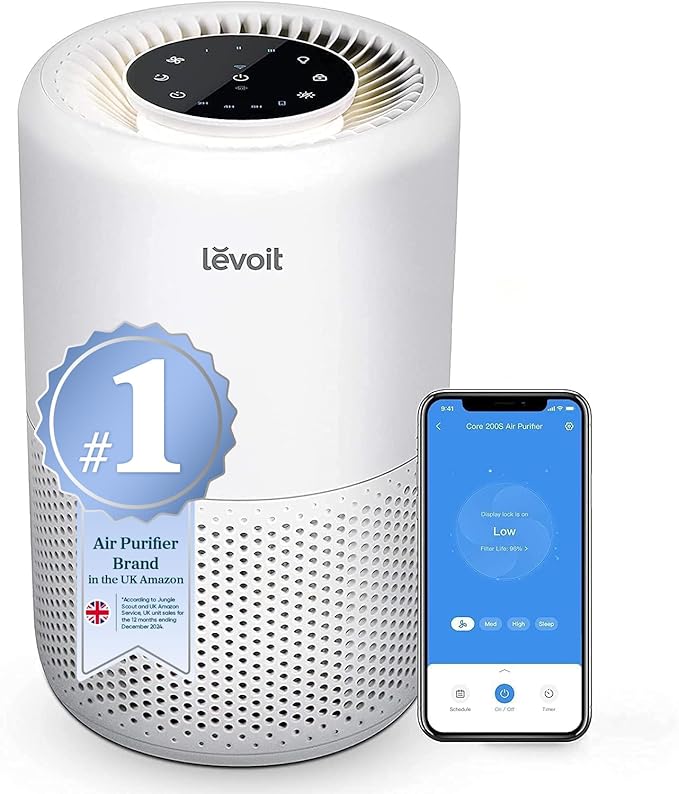
Levoit Smart HEPA Air Purifier for Allergies & Pets, 64m² Bedroom Home Coverage, Alexa & App, Ultra-Quiet Sleep Mode, Timer, Night Light, Removes 99.97% Pollen Dust Odour Smoke, Core 200S

Levoit
LEVOIT Air Purifier for Bedroom Home, Quiet HEPA Filter Cleaner with Fragrance Sponge & 3 Speed for Better Sleep, Air Frenshener, Allergies, Dust, Pet Dander, Odour, Smoke, Office, Desktop, Core Mini
Levoit
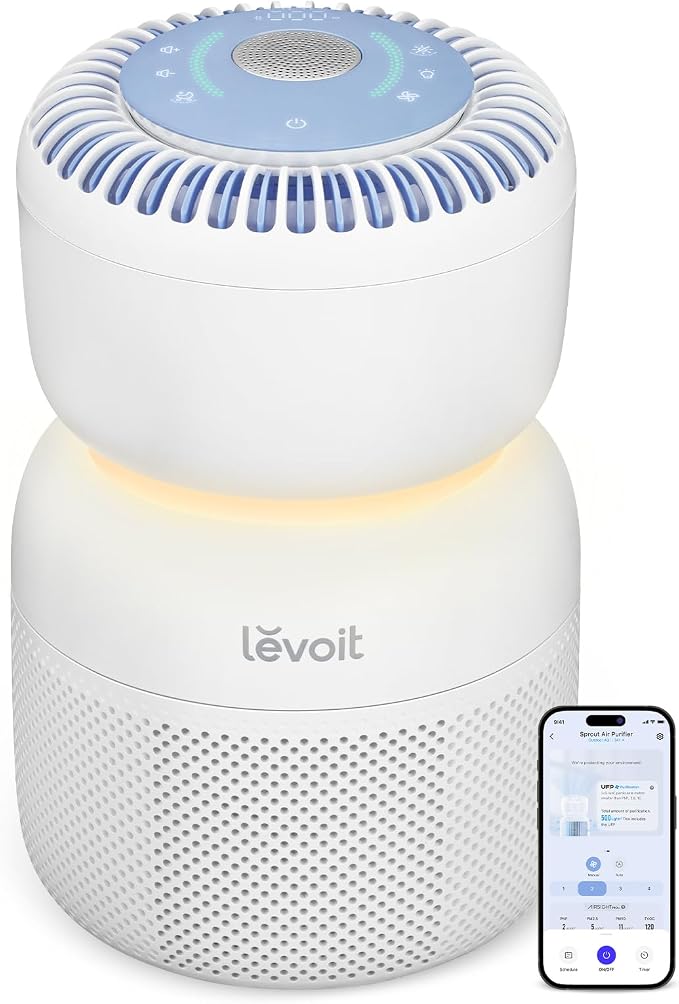
Levoit Smart Air Purifier for Bedroom Home, 5 Sensors Monitor 7 Air Quality Factors, HEPA Filter Captures 99.99% of Ultrafine Particles, Removes Odours & VOCs, Air Quality Display, App Control, Sprout

Levoit
Levoit Smart HEPA Air Purifier for Bedroom Home 108 m², CADR 258 m³/h, Laser Air Quality Sensor with Auto Sleep Mode, Alexa & App Control, Remove 99.97% Pollen/Dust/Odour, Core 300S
Recommended Reading
Best Products
Best Air Purifiers in 2026
Comparison
H13 vs HEPA + Carbon Air Purifier Filter: Which Is Better?
Comparison
Small Room vs Whole-Home Air Purifier: Which Do You Need?
Review
GoveeLife Mini Air Purifier for Bedroom, HEPA Smart Filter Air Purifier with App Alexa Control for Pet Hair, Odors, Pollen, Smoke, Portable Air Cleaner with 3 Speeds, 2 Modes, Timer, Aroma for Home
Review
Levoit HEPA Air Purifier for Bedroom Home, Allergies & Pets, Quiet Sleep Mode with Aromatherapy, 3 Fan Speeds, Removes Pollen Dust Odour Smoke, Ozone Free
Review
Levoit Smart HEPA Air Purifier for Allergies & Pets, 64m² Bedroom Home Coverage, Alexa & App, Ultra-Quiet Sleep Mode, Timer, Night Light, Removes 99.97% Pollen Dust Odour Smoke, Core 200S
Review
LEVOIT Air Purifier for Bedroom Home, Quiet HEPA Filter Cleaner with Fragrance Sponge & 3 Speed for Better Sleep, Air Frenshener, Allergies, Dust, Pet Dander, Odour, Smoke, Office, Desktop, Core Mini
Explore