Buying Guide
Robot Vacuum Buying Guide
Everything you need to know before buying a robot vacuum for a UK home — navigation systems explained, suction power demystified, mopping systems, dock stations, floor types, pet hair, battery life, and independent recommendations.
What is a robot vacuum?
A robot vacuum is an autonomous cleaning device that moves independently around a room, collecting dust, debris, and pet hair from floors without requiring someone to push or guide it. You place it on the floor, set a schedule via an app, and it returns to its charging dock when the job is done or the battery runs low.
The category has matured considerably since the early models that bumped around rooms at random. Modern robot vacuums use laser or camera-based mapping to build a floor plan of your home, plan systematic cleaning paths, and navigate around obstacles. Many now also mop — applying water to hard floors on the same pass.
This guide explains what the specifications actually mean, what the design differences between models affect in practice, and the most common mistakes buyers make when comparing options.
UK carpet context
How robot vacuums work
A robot vacuum has three core systems that must work together: navigation (how it finds its way around), cleaning (how it picks up debris), and docking (how it recharges and empties itself). The quality of each system varies enormously between price points and brands, and the specification sheets rarely tell you which system a given model prioritises.
Most models follow the same basic sequence: map the room, plan a path, execute the path in parallel rows or a zone-based pattern, detect and avoid obstacles, return to dock when finished or when battery drops below a threshold, and recharge. More advanced models will then resume exactly where they stopped and complete the remaining areas.
What robot vacuums cannot do
Suction power explained
Robot vacuum suction is measured in Pascal (Pa) — the same unit used for pressure. A higher Pa figure means the motor is generating more negative pressure at the suction inlet. Manufacturers routinely lead with headline Pa figures, but this number has important limitations as a buying criterion.
Common suction ratings in the current UK market:
| Suction Rating | Segment | Carpet Performance | Notes |
|---|---|---|---|
| Up to 4,000 Pa | Budget | Light debris on low pile only | Adequate for hard floors; limited on carpet |
| 4,000–6,000 Pa | Mid-range | Good on low pile; adequate on medium pile | Solid all-round performance for most UK homes |
| 6,000–8,000 Pa | Mid-premium | Good on medium pile; adequate on deep pile | Noticeably better on higher carpets |
| 8,000–12,000 Pa | Premium | Very good on medium and deep pile | Diminishing returns vs 6,000 Pa on hard floors |
| 12,000–20,000 Pa | Flagship | Excellent across all pile depths | Manufacturer figures; real-world gains are narrower |
Pa figures are not standardised
One meaningful real-world consequence of high suction: noise. Higher-suction motors are generally louder. Flagship 20,000 Pa models are typically audible from another floor of a UK terrace. If you plan to run the robot while home, noise is a direct trade-off against suction power.
Mopping systems
Most mid-range and premium robot vacuums now include a mopping function. The quality and usefulness of mopping varies enormously — from a damp cloth dragged passively over the floor to a dual-rotating mop system with active scrubbing. Understanding the difference matters, because “includes mopping” as a specification tells you almost nothing useful.
No mop
Vacuum-only robots are simpler, lighter, and typically have larger dustbins than combined units. If your home is primarily carpet, a vacuum-only robot may be preferable — combined units often carry a mop module that is redundant and slightly reduces dustbin capacity.
Static mop (drag mop)
A damp microfibre pad attached to the underside of the robot is dragged over hard floors. There is no mechanical action beyond the dragging motion — the pad relies on moisture and friction to lift residue. This is the most basic mopping implementation. It is adequate for light surface dust on sealed hard floors but will not remove dried spills or sticky residue. The pad must be manually rinsed and reattached.
Vibrating mop
An electromechanical mechanism vibrates the mop pad against the floor at high frequency — typically 600–3,000 RPM or equivalent oscillation cycles. This provides substantially more scrubbing force than a static drag pad. Vibrating mops can remove light dried residue and are effective on sealed hard floors for routine maintenance. They remain limited when dealing with genuinely soiled areas.
Dual rotating mop
Two separate rotating mop discs spin continuously against the floor. This delivers active scrubbing pressure across the mop head area. Combined with the robot's forward motion, the rotating discs generate more cleaning force than vibrating pads. Found on premium Dreame, Roborock, and Ecovacs models in the £400–£700 range and above. Clearly better than static or vibrating pads on hard floors with visible soiling. Still limited on grout lines and textured surfaces.
Roller mop
A cylindrical microfibre roller rotates against the floor — similar in principle to a traditional wet mop roller. Less common in robot vacuums. Provides good contact area and reasonable scrubbing force. The mechanism requires maintenance (the roller must be removed and cleaned) but can provide thorough hard floor coverage.
Mopping on UK carpet
Dock stations
The dock is where the robot returns to charge, and — in newer models — where it automates the tasks that previously required manual intervention. A robot vacuum with a basic dock requires you to empty the dustbin after every run; a robot with a full auto-empty, auto-wash dock can go several weeks with minimal maintenance.
Dock features — in approximate order of entry price:
Self-empty dock
The dock contains a larger bag or bin that the robot empties into automatically on return. The robot's small onboard dustbin is vacuumed clean by the dock via suction. You empty the dock bag every 4–8 weeks depending on use. The self-emptying process is audible — typically 10–15 seconds of high-pitched suction. Self-empty docks are now widely available in the £250–£450 bracket.
Mop washing
The dock automatically washes the robot's mop pads between rooms or at the end of a cleaning session. The pads are rotated or vibrated against a cleaning board inside the dock while water is sprayed over them. Without this feature, the mop pad must be manually rinsed. For homes with large hard floor areas, auto mop washing meaningfully reduces maintenance burden.
Hot air drying
After washing, the dock blows hot or warm air over the mop pads to dry them. This prevents mould and mildew forming on a damp microfibre pad sitting in a dock between uses. Hot air drying takes 2–4 hours and is typically scheduled automatically. Without it, damp mop pads should be manually dried or replaced frequently.
Water refill
The dock contains a clean water reservoir that automatically refills the robot's internal water tank before each mopping run. This allows the robot to begin each session with a full tank, covering larger floor areas without returning mid-session for a manual refill. Larger reservoirs (2–4 litres) can sustain longer mopping runs.
Detergent refill
A small number of premium docks automatically dose cleaning solution into the mop water. Proprietary solution pods are required (and represent an ongoing cost — note this when comparing total ownership cost between brands). The cleaning benefit over clean water with a good mop system is marginal for routine maintenance.
All-in-one docks: genuine convenience at a cost
Floor types
Floor type significantly affects which robot vacuum is appropriate. Most robot vacuum marketing is optimised for hard floors — the testing conditions that produce the best-looking numbers. UK homes with carpet require more careful evaluation.
Hard floors
Wood, laminate, LVT, vinyl, tile, and stone are all hard floors. Almost all robot vacuums clean hard floors adequately — even budget models with modest suction handle light debris on sealed hard surfaces. The differentiators are edge cleaning (how closely the side brush reaches skirting boards), debris scattering (whether the robot pushes small particles ahead of it), and mop quality.
For homes that are predominantly hard floor, a combined vacuum-and-mop model in the £200–£400 bracket with LiDAR navigation and a vibrating or rotating mop system is the most practical choice for most buyers.
Carpet
Carpet performance is where budget and mid-range robots diverge most clearly. At low pile (cut pile, flatweave, loop pile), robots with 4,000+ Pa and a rubber roller brush clean adequately. At medium pile (Saxony, textured cut pile) — the most common carpet type in UK living rooms — suction below 4,000 Pa visibly struggles, and debris recovery drops. At deep pile (shaggy, thick Saxony), most robots are limited regardless of Pa rating — the pile physically impedes the brush and the robot's navigation.
Carpet boost mode
Mixed flooring
Most UK homes have mixed flooring — typically hard floors in kitchens and hallways and carpet in bedrooms and living rooms. LiDAR-mapped robots handle mixed flooring well: you can define room types in the app, control mopping on a per-room basis, and set carpet boost to activate only on carpeted zones. Budget robots without mapping cannot make these distinctions.
For mixed-flooring homes with both carpet and hard floors, a combined vacuum-and-mop robot with LiDAR navigation and carpet recognition is the recommended choice. Confirm that the mop module is physically raised or retracted when crossing onto carpet — not all models do this reliably.
Pet hair
Pet hair is one of the most demanding tasks for a robot vacuum and the area where differences between models are most practically significant. Long pet hair (cats, dogs, long-haired breeds) tangles around brush rolls. Short, fine hair (Labradors, short-hair cats) compresses into carpet pile and resists suction. Most budget robot vacuums struggle with both.
Key features for pet-hair households:
- Rubber roller brush or anti-tangle brush. Traditional bristle rollers collect hair and require frequent manual removal — often after every run in high-shedding households. Rubber roller brushes (or combined rubber-bristle designs) resist tangling significantly better. This is the single most important feature to verify for pet-hair use.
- Tangle-free side brushes. The small rotating side brushes that sweep debris toward the main brush are also prone to hair wrapping. Shorter side brush arms reduce this, though at the cost of some edge-cleaning reach.
- High-capacity dustbin or self-empty dock. A pet-hair household fills a standard robot dustbin quickly. A self-empty dock significantly reduces the frequency of manual intervention.
- HEPA or equivalent filtration.Pet dander is a common allergen. True HEPA filtration (99.97% of particles ≥0.3μm) is meaningfully better than standard filters at capturing allergens. Not all robots that claim “HEPA-grade” or “HEPA-style” filters meet the true HEPA standard — check the manufacturer's filter specification.
- Higher suction for pet-hair-on-carpet. Short pet hair embedded in carpet requires genuine suction power to lift. For carpet-heavy homes with shedding pets, a model with at least 5,000–6,000 Pa and a carpet boost mode is recommended.
Obstacle avoidance
Basic robot vacuums detect obstacles by bumping into them. Their sensors register the impact and the robot reverses and reroutes. This approach works for rigid furniture but is problematic for cables, pet bowls, shoes, and small objects on the floor.
Premium robots use camera-based obstacle recognition (often called AIVI or similar brand-specific names) to identify and avoid objects before contact. These systems can distinguish between a cable (steer around), a charging block (steer around), and a sock (attempt to vacuum or avoid depending on size). In our assessments, camera-based avoidance is materially better than bump-only detection — but the real-world performance still depends on lighting and object type.
The floor-prep trade-off
One specific UK concern: tumble dryer lint and clothing that have fallen from a laundry pile. Robot vacuums — including premium obstacle-avoidance models — can ingest small garments. A socked robot is rarely damaged but typically requires the run to be aborted. Set schedules to run when floors are clear.
Battery life
Robot vacuum battery life is typically stated in minutes and ranges from 60 to 300 minutes depending on the model and mode. The practical relevance of the stated figure depends heavily on suction level and floor type.
Battery consumption at maximum suction is 30–60% higher than at standard suction. Carpet boost mode increases consumption further. Most manufacturers state battery life at standard suction on hard floors — conditions that maximise the figure.
| Stated Battery Life | Realistic Coverage | Typical Home Size |
|---|---|---|
| 60–90 min | 40–60m² | Flat, small terrace |
| 90–120 min | 60–90m² | 2-bed semi, small flat |
| 120–180 min | 90–140m² | 3-bed semi, townhouse |
| 180–300 min | 140m²+ | Large detached, multi-floor |
Coverage estimates at standard suction on hard floors. Carpet and high-suction modes reduce effective coverage by 25–40%.
Most LiDAR-mapped robots support automatic recharge-and-resume: the robot returns to dock when low on battery, charges, and then continues cleaning the unmapped area. For larger homes, confirm this feature is present rather than assuming the robot will complete the job on a single charge.
Noise levels
Robot vacuums are not quiet appliances. The noise comes from three sources: the motor generating suction, the brush roll mechanism, and the airflow through the filter. Budget and mid-range models typically operate at 65–75 dB at standard suction — audible from anywhere on the same floor of a UK terrace house.
| Mode | Typical Range | Comparable Sound |
|---|---|---|
| Quiet / eco mode | 55–62 dB | Background office noise |
| Standard mode | 63–70 dB | Normal conversation at 1m |
| Max suction | 68–75 dB | Busy café background noise |
| Carpet boost | 70–78 dB | Hand dryer at distance |
The practical implication for most buyers: schedule the robot to run during the day when no one is home. Attempting to run a robot vacuum during a work call or while watching television at standard suction is likely to be disruptive. Quiet or eco modes reduce noise meaningfully but also reduce cleaning performance.
Scheduling tip
Running costs
Robot vacuums are energy-efficient appliances relative to full-size upright vacuums. A typical robot draws 25–80W during cleaning, compared with 600–2,200W for an upright vacuum. At the current UK unit electricity rate of approximately 24p/kWh:
| Robot Type | Typical Draw | Cost per 90-min Run | Annual Cost (daily use) |
|---|---|---|---|
| Budget (up to 4,000 Pa) | 25–40W | 1–2p | £3.65–£7.30 |
| Mid-range (4,000–8,000 Pa) | 40–60W | 1.5–2.5p | £5.48–£9.13 |
| Premium (8,000+ Pa) | 60–80W | 2.5–3p | £9.13–£10.95 |
| Self-empty dock (active) | 200–400W (brief) | ~1p per empty | ~£3.65 (daily empty) |
Calculated at 24p/kWh. Actual costs vary with suction mode and run duration.
The more significant ongoing cost is consumables: replacement filters (typically £10–£20 every 2–3 months), replacement brush rolls (£15–£35 every 6–12 months), and self-empty dock bags (£8–£15 per 4–8 weeks). Budget for these when comparing total cost of ownership between brands — proprietary consumable pricing varies significantly.
Maintenance
Robot vacuums require regular maintenance to sustain performance. A robot that is not maintained will deliver progressively worse cleaning results as filters block, brushes tangle, and sensors accumulate dust.
- Dustbin emptying. Without a self-empty dock, empty the onboard bin after every 1–2 runs. A full bin dramatically reduces suction.
- Brush roll cleaning. Remove and clean the main brush roll every 1–2 weeks, or more frequently in pet-hair households. Hair wrap reduces cleaning performance and can damage the motor if left.
- Filter cleaning and replacement. Tap filters clean over a bin every 1–2 weeks. Replace filters every 2–3 months depending on use. Clogged filters reduce suction and can allow fine particles to pass through the exhaust back into the room.
- Sensor cleaning. Wipe cliff sensors (the small sensors on the underside that prevent the robot from falling down stairs) and the LiDAR window (on the rotating turret, if present) with a dry cloth monthly. Dirty sensors cause navigation errors.
- Side brush replacement. Side brushes splay with use and lose effectiveness. Replace every 3–6 months.
- Mop pad maintenance. Rinse mop pads after every use if not auto-washed. Replace every 3–6 months or when pad fibres break down.
- Dock cleaning. For self-empty docks, empty and wipe the dock bag chamber monthly. For auto-wash docks, flush the wash tray and inspect the water pump filter quarterly.
Maintenance schedule
Smart home compatibility
Robot vacuums are inherently connected appliances — all require a companion app for full functionality. Smart home integration extends control beyond the app to voice assistants and home automation systems.
Alexa
Amazon Alexa integration is near-universal in the current robot vacuum market. Most major brands (Roborock, Dreame, Ecovacs, iRobot) offer Alexa skills that allow voice-triggered cleaning starts, stops, and returns to dock. Sending a robot to a specific room by voice requires that the robot has mapped the home and the room is labelled in the app. Integration quality varies — verify the specific Alexa skill is still maintained before purchasing.
Google Assistant
Google Assistant integration is similarly widespread, with comparable voice control capabilities to Alexa. Home speakers (Nest Mini, Nest Hub) can be used to trigger cleaning. The practical experience is equivalent to Alexa for basic commands.
Matter
Matter is an open smart home standard developed by major technology companies (Apple, Google, Amazon, Samsung). Robot vacuum support for Matter is emerging but not yet widespread as of mid-2026. Roborock and Ecovacs have announced Matter support on some flagship models. Matter integration would allow robot vacuums to work with any compatible home automation platform without brand-specific apps or skills — a significant simplification for multi-platform households. If smart home interoperability is important to you, check whether your shortlisted model has confirmed Matter support.
Apple Home (HomeKit)
Native Apple Home (HomeKit) support in robot vacuums is limited. A small number of models support HomeKit directly; the majority rely on third-party bridges such as HomeBridge running on a local server. If you are an Apple Home user, verify native HomeKit support before purchasing — do not assume it from Alexa or Google Assistant compatibility alone.
App dependency
Common buying mistakes
After reviewing this category extensively, these are the most frequently observed purchasing errors:
- Choosing on suction Pa alone. Pa figures are not standardised across brands and do not reliably predict real-world cleaning performance. A robot with 8,000 Pa and poor brush design may clean less effectively than a well-designed 5,000 Pa robot. Prioritise independently tested debris recovery rates.
- Ignoring carpet performance for carpeted homes. Most robot vacuum demonstration content is filmed on hard floors. If your home is significantly carpeted, specifically seek out performance data on medium-pile carpet — not just hard floor or thin rug results.
- Not accounting for floor clutter. The single biggest predictor of robot vacuum satisfaction is consistent floor management. A £600 robot will underperform a £250 one if it regularly gets stuck on cables or ingests dropped items. Manage expectations — and floors — accordingly.
- Overvaluing the mop function for carpet homes. In a home that is primarily carpet, the mopping function is largely irrelevant and adds maintenance complexity (mop pad washing, water tank refilling). A vacuum-only robot at equivalent price may have better suction and brush design.
- Buying a bristle brush roll for pet-hair use. Traditional bristle rollers tangle with long pet hair within a single cleaning session. A rubber roller brush is a prerequisite for any household with cats or dogs with medium to long coats.
- Assuming smart home compatibility. Alexa and Google compatibility is common; HomeKit is rare; Matter support is emerging but brand-specific. Verify the specific integration before purchasing if smart home control is important.
- Underestimating consumable costs. Proprietary consumables (dock bags, filters, brush rolls, mop pads) vary significantly in price between brands. Calculate the annual consumable cost for your expected use before comparing models on purchase price alone.
Who should buy one
Robot vacuum — is it right for you?
Pros
- Daily maintenance cleaning without effort — particularly valuable for busy households
- Keeps hard floors consistently clean between occasional upright vacuum sessions
- Pet-hair households see significant time savings with a well-suited model
- Can clean under low furniture that a standard vacuum cannot easily reach
- Schedulable — set and forget for working weeks
Cons
- Does not replace deep cleaning — particularly on medium and deep-pile carpet
- Requires floor management — cables, small objects, and clutter cause problems
- Ongoing maintenance and consumable costs
- Noise: 65–75 dB during operation — not suitable for running during sleep
- Cloud-dependent: full functionality relies on ongoing manufacturer service
Robot vacuums deliver the most value to households where floors are cleared of clutter, where maintenance cleaning is genuinely frequent (four or more times a week), and where hard floors constitute a significant portion of the home. They are a genuine convenience tool in this context — not a replacement for a full-size vacuum in any context.
Final buying advice
Our priority order for UK buyers:
- Choose LiDAR navigation for any home with more than one room. The systematic cleaning coverage and resume-after-charge capability are practically significant. The price premium over gyroscope navigation is now modest.
- Match suction to carpet type, not to the highest available Pa. For hard floors only, 4,000 Pa is sufficient. For medium-pile carpet, target 5,000–8,000 Pa. For deep pile or heavy pet hair on carpet, look for 8,000 Pa and above, and confirm carpet boost mode is available.
- Choose a rubber roller brush for any pet-hair household. This is the highest-impact accessory difference for pet owners. Verify the specific model has a rubber or anti-tangle design — not just a traditional bristle roll.
- Add a self-empty dock for genuinely low maintenance. The reduction in daily intervention — particularly in pet-hair homes — makes the self-empty dock the single most useful upgrade in the category for busy households.
- Do not overvalue mopping if your home is primarily carpeted. A combined vacuum-and-mop robot on a carpet-heavy floor is paying for a feature with limited application. Choose a vacuum-only model and put the price difference toward better suction or navigation.
- Verify smart home compatibility specifically — do not assume it from brand reputation. Alexa and Google Assistant are most widely supported. HomeKit requires explicit confirmation. Matter support is brand-specific and may require a firmware update.
Ready to choose?
Browse our robot vacuum reviews
Our robot vacuum reviews test on both hard floors and medium-pile carpet, measure noise independently, and assess real-world debris recovery — not manufacturer demonstration conditions.
Browse Robot Vacuum ReviewsAll FoxVerdict scores are derived from independent evidence — not manufacturer claims. Read our review methodology to understand how we score and grade evidence confidence. Some links on this page are affiliate links — affiliate disclosure.
Frequently Asked Questions
Frequently Asked Questions
Related Reviews

roborock
roborock Saros 10 Robot Vacuum and Mop — Feature-Rich but Evidence Gaps Remain

roborock
roborock Qrevo Curv 2 Pro Robot Vacuum and Mop — Capable on Paper, Key Data Missing

roborock
roborock Qrevo S Pro Robot Vacuum and Mop — Solid Spec Set, but Battery Data Missing

dreame
dreame X50 Ultra Complete Robot Vacuum — High Obstacle Clearance, Key Data Missing

dreame
dreame L40 Ultra AE Robot Vacuum and Mop — Dual Brush System, Key Data Absent

dreame
dreame L20 Ultra Complete Robot Vacuum and Mop — Feature-Rich, Evidence-Thin

dreame
dreame D10 Plus Gen 2 Robot Vacuum and Mop — Budget Self-Emptying, Evidence Gaps

Shark
Shark PowerDetect Robot Vacuum and Mop — Dry Mopping Only, Thin Evidence Base

ECOVACS
ECOVACS DEEBOT X8 PRO OMNI Robot Vacuum — Self-Washing Mop, Low Review Score
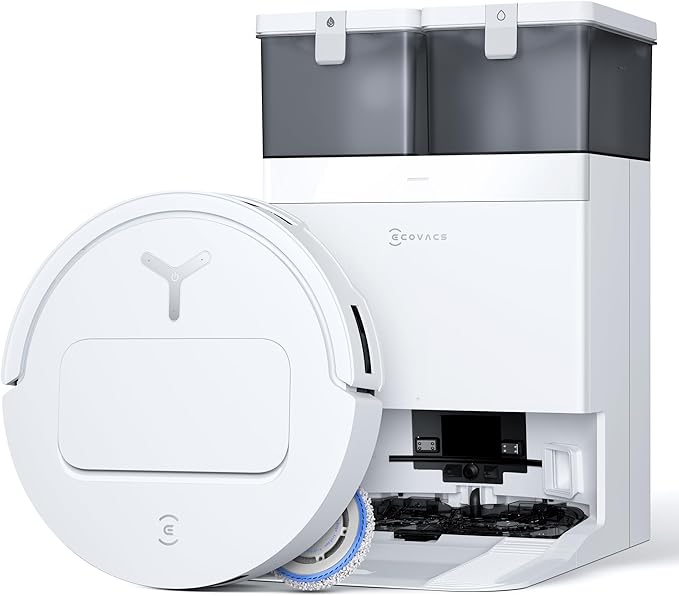
ECOVACS
ECOVACS DEEBOT T50 PRO OMNI Review: Slim Design, Limited Evidence

eufy
eufy Omni C20 Review: Slim Auto-Station Robot Vacuum at £309

eufy
eufy X10 Pro Omni Review: Full Station Automation at £589

eufy
eufy L60 Hybrid Review: Self-Empty Vacuum with Light Mop at £399
Recommended Reading
Best Products
Best Robot Vacuums UK 2026
Comparison
Roborock vs eufy Robot Vacuum: Premium vs Budget
Comparison
Best Pet-Hair Robot Vacuum vs General Models
Comparison
Self-Cleaning Dock vs Standard Self-Empty Robot Vacuum
Review
roborock Saros 10 Robot Vacuum Cleaner 22,000 Pa, 3.14-Inch Ultra Slim, Zero-Tangling, AI 3.0 Obstacle Avoidance, Auto Detachable Mop, 80°C Mop Washing, Hot Water Dock Self Cleaning (Black)
Review
roborock Qrevo Curv 2 Pro Robot Vacuum Cleaner with Mop, 25,000 Pa Suction, Zero-Tangle, 3.14-Inch Ultra Slim, AI Obstacle Avoidance, 100°C Hot-Water Mop Washing, Multifunctional Dock 3.0 Hygiene+
Review
roborock Qrevo S Pro Robot Vacuum Cleaner with Mop, 18,500 Pa Suction, Upgraded from QV 35S, Anti-Tangle, Smart Obstacle Avoidance, Custom Carpet Strategy, 75°C Mop Self-Cleaning, All-in-One Dock
Review
dreame X50 Ultra Complete Robot Vacuum with Mop, 20000Pa, Conquers Obstacles Up to 6CM, Liftable Brush&Mops, 80°C Hot Water Washing, Anti-Tangling, Removable Mop, Dual Flex-Arm, Dirt Detection